

A modular sign system fixes one part of the sign to the wall permanently and lets the visible part change. xsign’s four systems solve different problems: Jigsaw for exchangeable panels, Puzzle for lockable paper signs, Folio for signage that can be installed before the text is final, and Talky for audible wayfinding. This guide compares them so you can match the system to the space.
Most signs are made once and installed once, and they are wrong within a few years. Rooms change use, teams move, departments are renamed. A scheme that cannot adapt either gets replaced, at cost, or gets covered with printed paper stuck on with tape.
Modular sign systems exist to solve that. This guide compares the four systems that make up xsign’s patented interior product range, explains how they differ and where each works best. For a shorter introduction, see the xsign modular sign system.
What is a modular sign system?
A modular sign system separates the fixed part of a sign from the part that changes. The fixing module goes on the wall once. The face, which carries the text, symbol or colour, attaches to the module and can be replaced when it needs to be, without redoing the installation or marking the wall.
The advantage is lifetime cost and appearance. A changeable sign that looks permanent keeps a scheme consistent for years, and the next change costs a replacement panel instead of a new sign and a repaired wall.
How do Jigsaw, Puzzle, Folio and Talky compare?
Each system is described in more detail below, with the question that decides which one fits.
Jigsaw: when panels need to be exchanged
Jigsaw is the original xsign system, launched in 2000, and the one most often used across its client installations. A module is fixed permanently to the wall, and a panel in the chosen material clicks onto it. The panel is held by a locking pin that drops into the top of the device, so it cannot be removed casually.
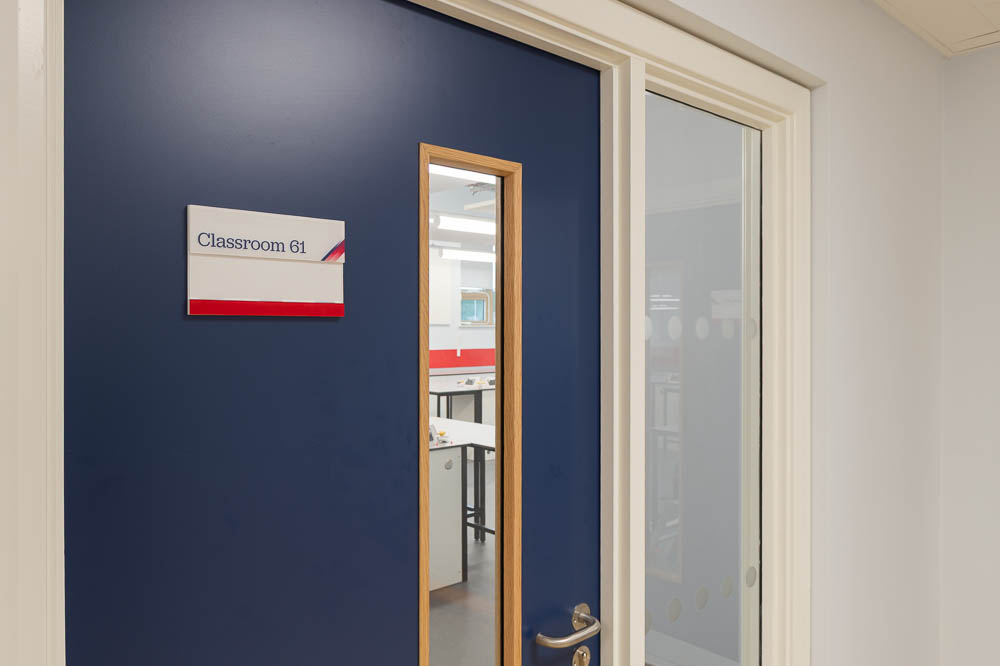
Jigsaw signs can be screwed to the wall or fixed with tape, which suits both permanent and temporary fixing. The audible click confirms that a panel is seated correctly, which matters when installers are working quickly.
Jigsaw is the right choice where the scheme will outlive the information on it: a hospital ward that changes specialty, a university building that changes department, an office that changes tenant. Because the system accepts a wide palette of materials, it is not limited to extruded or painted aluminium. See the Jigsaw page for details.
Puzzle: when information changes daily
Puzzle is a lockable paper-holding sign that needs no special tool to open. The paper insert slides out and a new one slides in, with audible clicks to confirm it is secure. It takes ISO A sizes and US paper sizes, and smaller door signs are supplied with pre-perforated paper and templates for Word, so staff can print their own updates.
Because paper holders are normally a weak point, with lenses that jam, fall out or scratch, Puzzle is designed to keep the sign looking permanent while the content changes. The sliding header panel can be printed by direct UV printing or ultragraving, or produced with 3D printed tactile and braille elements. The system is complemented by free-standing paper holders and by projecting and suspended signs in a matching style.
Puzzle suits schools, universities and offices where signage often needs to change to reflect the occupant of a room or the meetings that day. See the Puzzle page and our guide to the benefits and features of Puzzle signs.
Folio: when the text is not ready
Folio is a paper-insert system designed for a specific problem: signs are often needed before anyone has decided what they should say. Folio can be installed untexted, with the paper inserts added later, and the client can print its own inserts at any time. This avoids site delays when an organisation is relocating or in a state of flux.
Folio can be customised into a broad range of specifications, with a range of lens options, and it supports perforated paper inserts and word templates. It is secure and reliable because it is designed with the differential expansion of materials in mind, which is what stops lenses working loose.
Folio is useful as an interim solution while a signage scheme is being finalised and as a permanent, low-maintenance option for offices and education. See the Folio page.
Talky: when sight loss is part of the brief
Talky is a programmable talking sign. A button on the sign speaks a recorded message when pressed, giving directional and navigational information to people with sight loss. Building officers and facilities managers can programme and re-record the message themselves, using a rear microphone that allows up to 80 seconds of recording, or by transferring higher-quality audio files through a line-in mini jack. Controls and batteries are accessed from the rear.

Talky can be integrated into traditional signs and into xsign’s own systems, including Puzzle, and fixed to Jigsaw for secure, modular access. Interchangeable graphics in the button’s lens allow bespoke symbols and pictograms. See Talky signs and our guide to creating more accessible signage schemes with Talky.
Which system should you choose?
Choose the system by asking what will change, how often, and who will change it.
- Information changes rarely but the sign must be replaceable: Jigsaw.
- Information changes often and staff will make the changes: Puzzle.
- The text is not final at installation: Folio.
- People with sight loss need audible direction: add Talky.
- Different parts of the building have different needs: combine systems. The four are designed to work together as one visual family, so a scheme can use Jigsaw for permanent identification and Puzzle for meeting rooms without looking inconsistent.
The interior scheme as a whole is covered in our interior signage guide.
Can the systems be used with different materials?
Yes. The systems separate the fixing from the face, so the face can be made in a wide range of materials. xsign’s patented systems can be applied to stainless steel, including with concealed fixings and modular layouts, and to other materials such as acrylic and wood. Where the finish matters, specify the material and fixing together. See our signage materials guide and stainless steel signs.
Modular systems in practice
Jigsaw has been used on educational schemes including Birmingham City University, and modular systems feature across xsign’s office, healthcare and education work. See office signs, school signs and university signs.
FAQs
What is a modular sign system?
A modular sign system fixes a module to the wall once and allows the visible panel or insert to be changed without removing the fixing. It lets signage adapt as rooms and information change.
What is the difference between Jigsaw and Puzzle?
Jigsaw is an exchangeable panel system: a panel clicks onto a fixed module and is held by a locking pin. Puzzle is a lockable paper-holding sign in which paper inserts slide in and out without tools. Jigsaw suits changes of panel, Puzzle suits frequent changes of information.
Can Folio signs be installed before the text is decided?
Yes. Folio can be installed untexted and the inserts added later, and clients can print their own inserts at any time.
Are modular signs secure?
Jigsaw uses a locking pin to make panels tamper resistant, and Puzzle is lockable without special tools. Security is part of the design of both.
Do modular sign systems cost more than fixed signs?
Modular signs can cost more initially than a fixed sign, but they are generally more cost effective over the life of a building because panels can be replaced instead of the whole sign. A quotation against a sign schedule gives the accurate comparison.
Can Talky be added to an existing scheme?
Talky can be integrated into traditional signs and into xsign’s systems, including Puzzle and Jigsaw. Confirm the details of a specific scheme with xsign.
Choose the right system with xsign
xsign designs, manufactures and installs all four systems in the UK, and can advise on which combination suits your building. Send us your sign schedule and we will help you match systems to spaces.
Get a free quote or explore interior signs.