
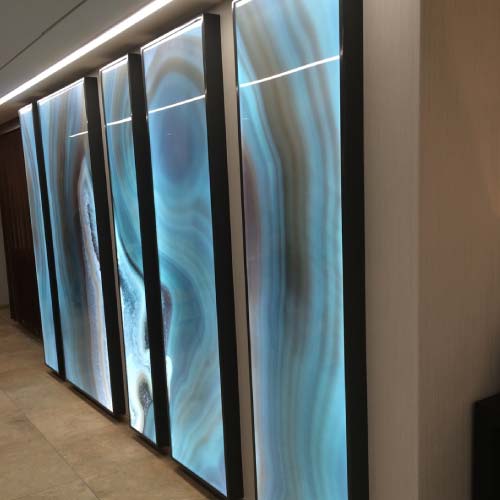
Frameless glass is one of the defining moves of the modern workplace. It opens sightlines, borrows daylight from the core, and makes a floor plate feel larger than it is. It also creates a hazard that is easy to miss on a drawing: a clean, uninterrupted pane a person can walk straight into. Glass manifestation is the detail that resolves that hazard, and it is usually specified last and noticed first.
For architects and specifiers, manifestation sits in an awkward gap. It is a safety requirement under the Building Regulations, an accessibility duty under the Equality Act, and a branding opportunity all at once, and those jobs pull in different directions. This guide sets out what glass manifestation is, when it is legally required, and how to design it so it protects people, meets the regulations and still does something for the space. It draws on xsign’s vinyl graphics and manifestation work across commercial fit-outs.
What glass manifestation is, and what it has to do
Glass manifestation is any applied marking that makes a glazed surface visible: a pattern, a band, a logo or a frosted film on windows, doors, partitions and screens. Its first job is simple. It stops people walking into glass they cannot see. Everything after that, from privacy to brand, is built on top of the safety case.
It matters more now because of the way buildings are designed. A 2005 office had solid partitions and framed doors. A current one has structural glass walls to meeting rooms, glazed reception screens and full-height partitions with minimal framing, so there is far more transparent glass at head height than there used to be. Manifestation is what keeps that transparency safe.
When the regulations require manifestation
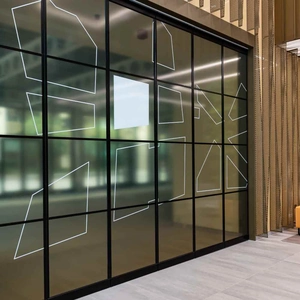
Manifestation is not optional decoration. In non-domestic buildings, Approved Document K of the Building Regulations requires that large uninterrupted areas of transparent glazing, in places where people might mistake the glass for an opening, are marked so the glazing is apparent. Reception screens, meeting-room walls, glazed doors and full-height partitions all sit inside that definition.
The guidance is specific about height. Manifestation should sit at two levels: between 850mm and 1000mm above floor level, and again between 1400mm and 1600mm. Two bands catch both a standing adult and a child or a wheelchair user. The markings have minimum sizes too, a logo at least 150mm high or a broken line or motif at least 50mm high, and they have to contrast with the background in every lighting condition the space sees, not just on a bright morning.
Manifestation also runs alongside a separate requirement. Glazing in critical locations, the low-level panels and the areas beside doors, has to be safety glass that either breaks safely into blunt particles or resists impact, tested to BS EN 12600 or BS 6206. Manifestation makes the glass visible. Safety glass makes contact survivable if someone reaches it anyway. A complete specification covers both, and it is easy to resolve one and forget the other.
Accessibility, contrast and the limits of a dot pattern
The Building Regulations set the floor. The Equality Act 2010 and the standard that gives it technical shape, BS 8300-2:2018, push further. They treat glazed doors and screens as a visibility issue for people with reduced vision and ask for manifestation that contrasts clearly with whatever is seen through and around the glass.
That is harder than it sounds. The background behind a glass wall is not fixed. It changes as people move through the space and as daylight shifts across the day, so a marking that contrasts at nine in the morning can wash out by mid-afternoon. Getting it right means testing the contrast against the real interior rather than a swatch on a desk. Our inclusive signage work treats that contrast as a requirement to be checked, not a box to be ticked.
Where manifestation earns its keep: privacy and brand
Once the safety case is met, manifestation becomes one of the cheapest pieces of interior branding in a fit-out. A frosted band can carry a logo, a repeating motif or a graduated dot pattern that fades from opaque to clear. Meeting rooms get privacy at seated eye level while keeping daylight above and below. Reception screens carry the brand at the first point a visitor sees it.
On a fit-out for a leading financial services headquarters in Paddington, manifestation did exactly this double duty across the glazed meeting suites, meeting the compliance heights while carrying a restrained pattern that suited the interior. At the other end of the scale, the White Pine coffee shop used manifestation as part of the shopfront identity rather than a sign bolted on beside it. Same technique, different jobs.
There is a real trade-off to manage. The more pattern you add for privacy or brand, the less transparency you keep, and transparency is usually why the glass was specified in the first place. A dense frost quietly turns a glass wall back into a solid one. The skill is in the balance: enough marking to be safe, compliant and on-brand, and no more than the space can spare.
Materials and methods
Most manifestation is applied film. Cut vinyl gives crisp logos and lines in a single colour. Printed film carries full-colour graphics and photographic imagery. Etch-effect or frosted film mimics acid-etched glass at a fraction of the cost and, unlike true etching, can be removed and replaced when a tenant or a brand changes. True acid-etched or sandblasted glass is permanent and premium, and it suits a feature screen more than a partition that may be reconfigured in three years.
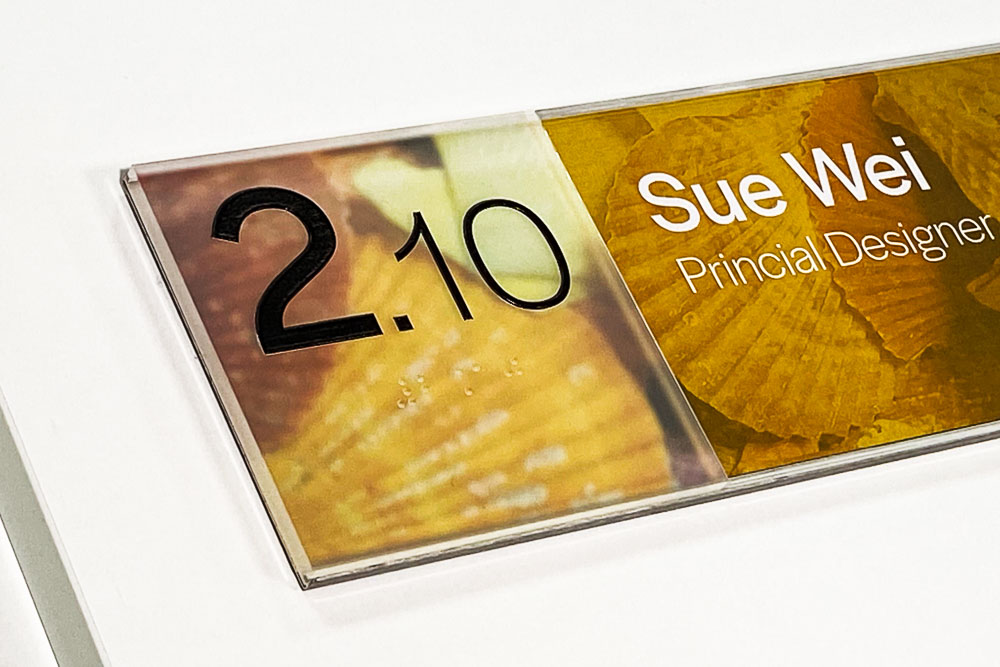
Where signage sits on the glass rather than in it, our patented folio™ insert system holds an acetate print against the pane with invisible fixings, giving a flush, fully glazed sign that updates without adhesive residue or reprinting. It is a practical option for room names and changeable information on glazed doors, where a stuck-on vinyl would need re-cutting every time a room is renamed.
Durability comes down to the film grade and the installation. A quality cast vinyl on a clean, correctly prepared pane lasts the life of a typical fit-out and cleans with ordinary glass cleaner. A cheap film applied over dust bubbles and peels within a year, which is why the preparation matters as much as the material.
Specifying manifestation that works
The failure pattern is familiar. Manifestation gets left off the glazing package and added as a snag at handover, usually in whatever generic dot pattern the installer happens to carry. Brought in early, it can be coordinated with the glazing, the finishes and the brand, and drawn at the right heights from the start.
Three things make the difference. Put the two marking heights and the contrast requirement on the drawing. Decide early whether the film is doing a compliance job, a privacy job or a brand job, because that decision sets the density. And design for change, so a rebrand or a room reshuffle does not mean stripping and re-etching a whole floor. Our work on office signage schemes treats manifestation as part of the wider sign family rather than a separate line item, so the glass, the doors and the wall signs read as one system.
Glass manifestation is a small part of a fit-out that does an outsized amount of work. It keeps people safe, satisfies the regulations, and carries the brand onto the most visible surfaces in the building. If you are specifying glazed partitions, screens or doors on a current project, our team can help you get the compliance and the design right together. Explore our graphics and manifestation service or get in touch to talk through a scheme.
FAQs
What is glass manifestation?
Glass manifestation is any applied marking, such as a frosted band, a pattern, a logo or a printed film, that makes a glazed surface visible. Its main purpose is to stop people walking into clear glass doors, screens and partitions, and it can also add privacy and branding to the same surface.
Is glass manifestation a legal requirement?
In non-domestic buildings, yes. Approved Document K of the Building Regulations requires large areas of transparent glazing in critical locations to be marked so the glass is apparent. The Equality Act 2010 and BS 8300-2:2018 add a duty to make that manifestation clearly visible for people with reduced vision.
What height should glass manifestation be?
Approved Document K guidance places manifestation at two levels: between 850mm and 1000mm above floor level, and between 1400mm and 1600mm. Markings should be at least 150mm high for a logo or 50mm for a broken line, and must contrast with the background in all lighting conditions.
Can glass manifestation be frosted or branded for privacy?
Yes. Frosted or etch-effect film is one of the most common approaches, and it can carry a logo, a repeating motif or a graduated pattern that gives privacy at seated eye level while keeping daylight. The balance to watch is density: too much pattern removes the transparency the glass was chosen for.
What is the difference between etched glass and manifestation film?
Acid-etched or sandblasted glass is permanently marked during manufacture and is premium and hard-wearing. Manifestation film is applied to the surface, costs far less, mimics an etched look convincingly, and can be removed and replaced when a brand or tenant changes. Film suits most fit-outs; true etching suits permanent feature screens.