
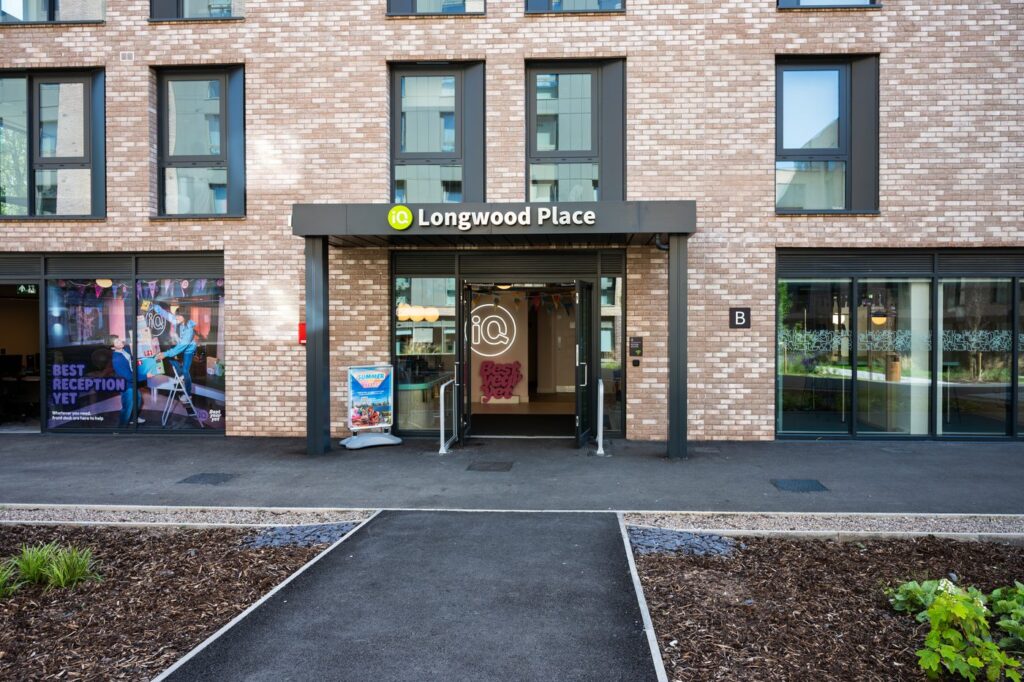
Exterior signage is the first thing a visitor reads and the last thing a specification tends to resolve. By the time it appears on a drawing, the facade material is fixed, the fixing zones are congested with services, and the sign has to work around the building rather than with it. The result is the sign that looks bolted on, streaks the cladding within two winters, or comes back to the contractor as a snag at handover.
None of that is inevitable. Exterior signage that reads as part of the architecture, and survives a decade of British weather, comes from decisions made early: material grade, fixing detail, illumination, and the statutory consents that quietly govern what can go on the outside of a building. This guide sets out what to fix in the specification, written for architects and the main contractors who have to deliver it.
What counts as exterior signage
Exterior signage covers more than the sign over the door. A complete external scheme usually runs to building identification (the primary name or logo on the facade), directional and vehicular signage across a site, entrance and threshold signage, statutory and regulatory signs, and any freestanding monoliths or totems at the approach. Each has a different reading distance, a different fixing problem, and a different consent position.
Grouping them into one coordinated package at specification stage matters. A scheme drawn as a single system holds its typography, material palette and mounting logic across the whole site. A scheme procured sign by sign drifts, and the drift is visible from the car park.
Material grade is the decision that determines lifespan
External signage lives a hard life. It is rained on, frozen, heated, cleaned with the wrong products, and in coastal or roadside settings it takes salt and grime that indoor signage never sees. Material grade, not sign type, is what decides how it looks five years in.
For building identification, flat-cut and built-up letters remain the long-life specification. A 250mm flat-cut aluminium letter, coated and fixed with stud-and-spacer detailing into masonry, is effectively impervious to weather and unaffected by the repaint cycles the wall goes through around it. Where the brief calls for stainless steel, the grade is the detail that matters: 316 marine-grade resists chloride corrosion in coastal and high-pollution environments where 304 will eventually tea-stain. Our companion guide to specifying stainless steel signage covers where each grade earns its place.
Coated aluminium is the workhorse for larger faces and panel signage, because it is light, takes colour well, and keeps wind loading manageable at scale. The saving on a lower-grade substrate or an unstable pigment is almost always spent again on early replacement, so the material line is not the place to value-engineer.
Fixing to a real building, not a drawing
The fixing detail is where exterior signage succeeds or fails on site. The questions are practical. What is the wall actually built of behind the cladding? Is there a rainscreen cavity or insulation that changes the fixing depth? Can the facade carry the wind load of a large sign, and does the detail let water drain away instead of trapping it against the substrate?

Our patented jigsaw™ fixing system was developed for exactly this problem: it releases identification and directional signage from the limits of extruded and painted aluminium while keeping the engineering integrity in the fixing itself, across stainless steel, aluminium and coated finishes. On the exterior work we delivered at 10 Exchange Square, the fixing detail was resolved against the facade build-up rather than retrofitted to it, which is the difference between a sign that stays put and stays dry and one that stains the wall by year two.
The consents that govern what goes outside
Exterior signage carries a statutory dimension that interior signage does not, and it catches projects out late. Most external advertisements and signs are controlled under the Town and Country Planning regime, and many need express advertisement consent before they can legally be displayed or illuminated. The government’s guide for advertisers on outdoor signs sets out which classes have deemed consent and which do not, and the position tightens in conservation areas and on listed buildings.
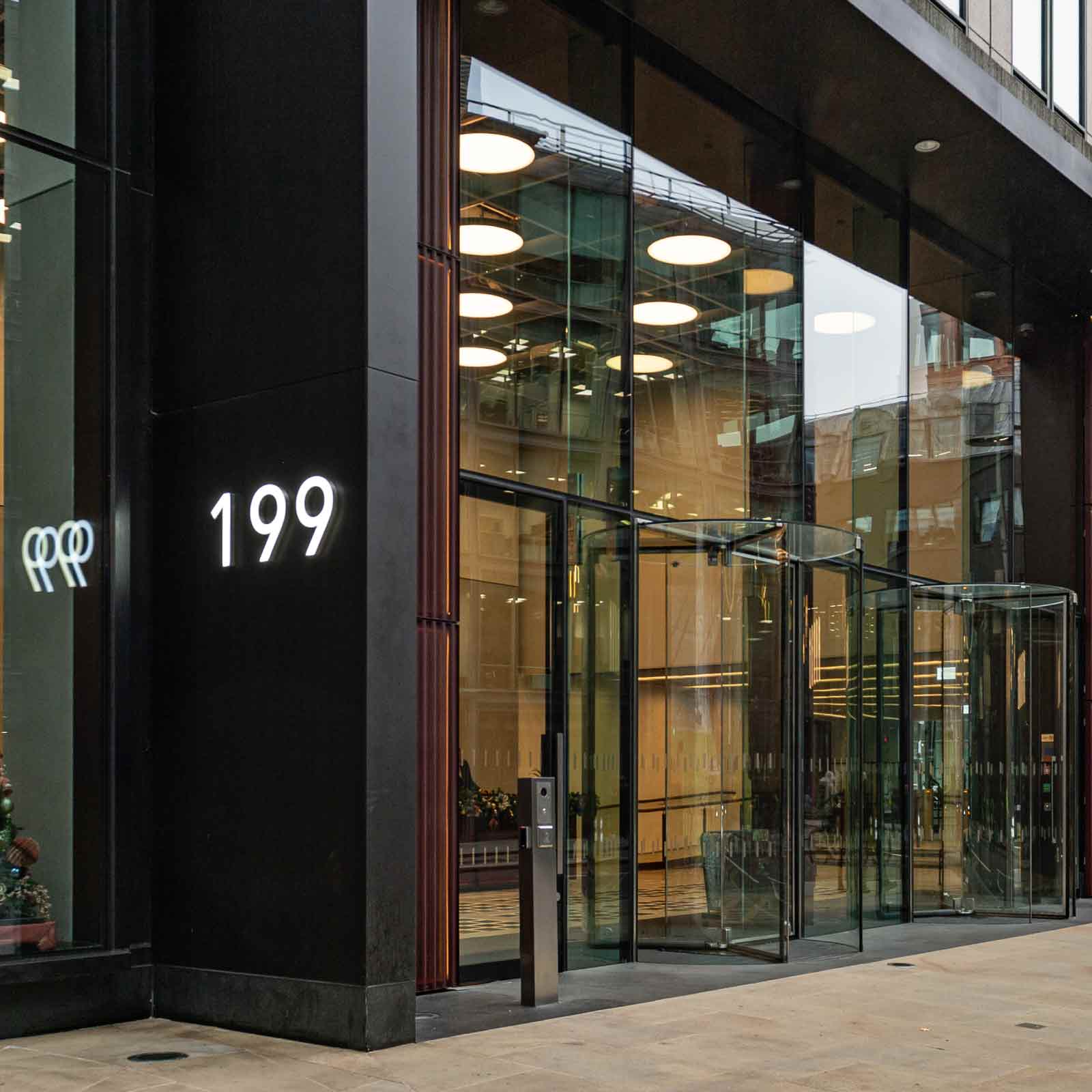
Illumination is the usual trigger. An illuminated fascia or monolith that would have deemed consent unlit often needs express consent lit, and the application takes time the programme rarely has spare. Resolving consent at technical design, alongside the rest of the statutory package, keeps it off the critical path. External signage on accessible routes also sits within the accessibility framework: BS 8300-2:2018 gives the character heights and luminance contrast that external identification and directional signage should meet.
Scale and legibility at the approach
Scale is not simply making the sign larger. The purpose of building identification and directional signage is legibility at the distance and speed people actually read it. A sign read by a driver approaching a business park needs bold letterforms, generous spacing and strong contrast, because there are a few seconds to take it in. A pedestrian threshold can carry finer type and more detail.
Letter height follows viewing distance, and it is worth setting the relationship in the specification rather than leaving it to be judged on site. A large sign that is technically visible but hard to read at a glance has missed its job.
Delivery: lead time and single-supplier responsibility
Fabricated exterior signage is made to order, and the honest trade-off is that quality and lead time move together. Rushing fabrication is where finish quality slips. For main contractors, the practical benefit of a single signage partner running design, manufacture and installation is that lead times, RAMS and the fit-out interface sit with one accountable party rather than three, which takes interface risk out of the programme.
Bringing signage into the conversation at technical design, rather than at handover, lets consent, fixing detail and fabrication run in parallel with the build. The exterior scheme we delivered at Bankside at Colliers Yard is a case in point: engaged early, the external identification was designed for the finished facade rather than adapted to it.
FAQs
What is the best material for exterior signage?
It depends on the environment. Coated aluminium suits most building identification and larger panels because it is light and holds colour. For coastal or high-pollution sites, specify grade 316 marine-grade stainless steel, which resists the chloride corrosion that stains grade 304. Flat-cut and built-up letters outlast printed panels outdoors.
Do exterior signs need planning permission?
Many do. External signs and advertisements are controlled under the Town and Country Planning advertisement regulations. Some classes have deemed consent, but larger and illuminated signs, and most signage in conservation areas or on listed buildings, need express advertisement consent before display. Resolve this at technical design, not at handover.
How long should exterior signage last?
A well-specified external scheme should last the life of the facade, typically ten to twenty years for commercial buildings. Lifespan is driven by material grade and fixing detail. Marine-grade stainless steel and coated aluminium hold up indefinitely outdoors when correctly fixed and drained; lower grades and unstable pigments fail early.
When should exterior signage be specified?
At RIBA Stage 4, alongside finishes and the M&E coordination. Specifying at Stage 4 lets the fixing detail be resolved against the real facade build-up, aligns materials with the finishes schedule, and gives advertisement consent enough runway to clear before the programme needs the signs installed.
Can one supplier handle a whole exterior signage scheme?
Yes, and it usually reduces risk. A single partner running design, manufacture and installation keeps typography and materials consistent across the site, owns the lead times and fixing detail, and gives the main contractor one accountable point for the package rather than a set of trade interfaces to coordinate.
Specifying exterior signage for your next project
Exterior signage that supports a building rather than sitting awkwardly on it comes from early decisions: the right material grade for the environment, a fixing detail designed for the real facade, consent resolved in good time, and legibility set to real reading distances. If you are writing exterior signage into a current or upcoming project, our team works with architects and main contractors from technical design through to handover. Explore our exterior signage service or get in touch to talk through a brief.