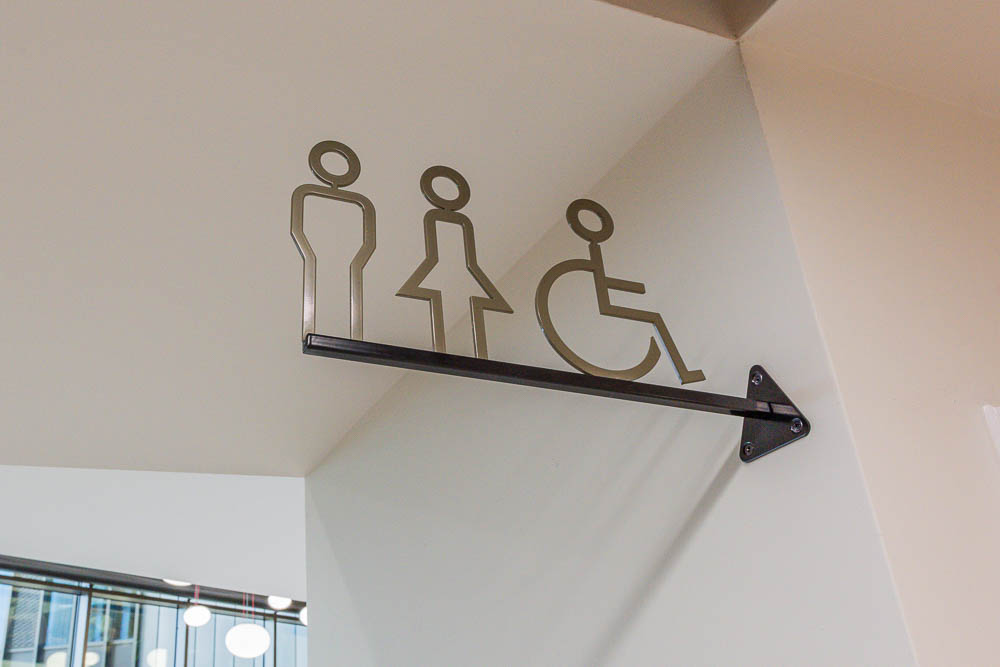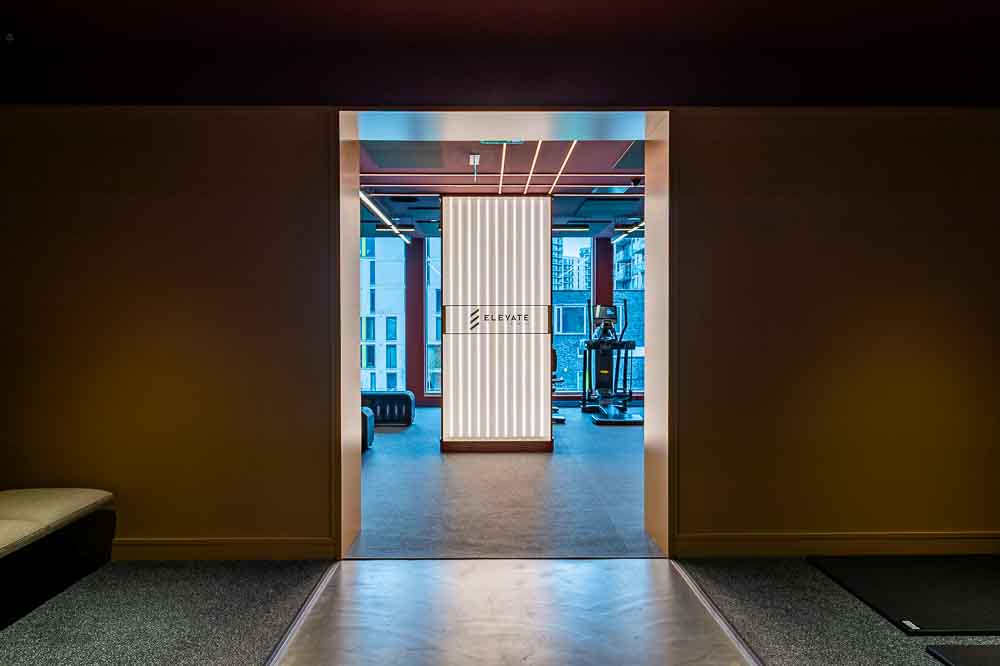
Office signage is often underestimated. It is treated as a finishing detail rather than a core part of how a workplace functions. In reality, signage plays a central role in shaping first impressions, supporting navigation and reinforcing brand identity.
In modern office environments, where layouts are fluid and organisations evolve quickly, signage must do more than identify rooms. It must be clear, adaptable and aligned with the architecture around it.
Understanding the Role of Office Signage
Office signage operates at several levels simultaneously. At a basic level, it identifies spaces such as meeting rooms, departments and facilities. At a broader level, it supports wayfinding, helping people move through a building without hesitation.
Beyond function, signage also communicates tone. A well-considered signage scheme reflects the professionalism of an organisation and contributes to the overall workplace experience. This is why office signage should be considered early, alongside interior design and spatial planning, rather than added later.
Projects focused on office signage benefit significantly when signage is integrated into the design process from the outset.
Common Challenges in Office Environments
Office environments present a unique set of challenges. Teams move, departments expand and spaces are frequently reconfigured. Signage that assumes permanence quickly becomes outdated, leading to inconsistent replacements and visual fragmentation.
Another common issue is lack of hierarchy. When signage is introduced without a clear structure, users are forced to search for information rather than being guided naturally through the space.
There is also the question of balance. Office interiors are often carefully designed, and poorly considered signage can disrupt that work. Oversized graphics, inconsistent materials or visible fixings can undermine an otherwise refined environment.
Choosing the Right Signage System
The choice of signage system has a significant impact on both performance and longevity. In office environments, flexibility is often as important as appearance.
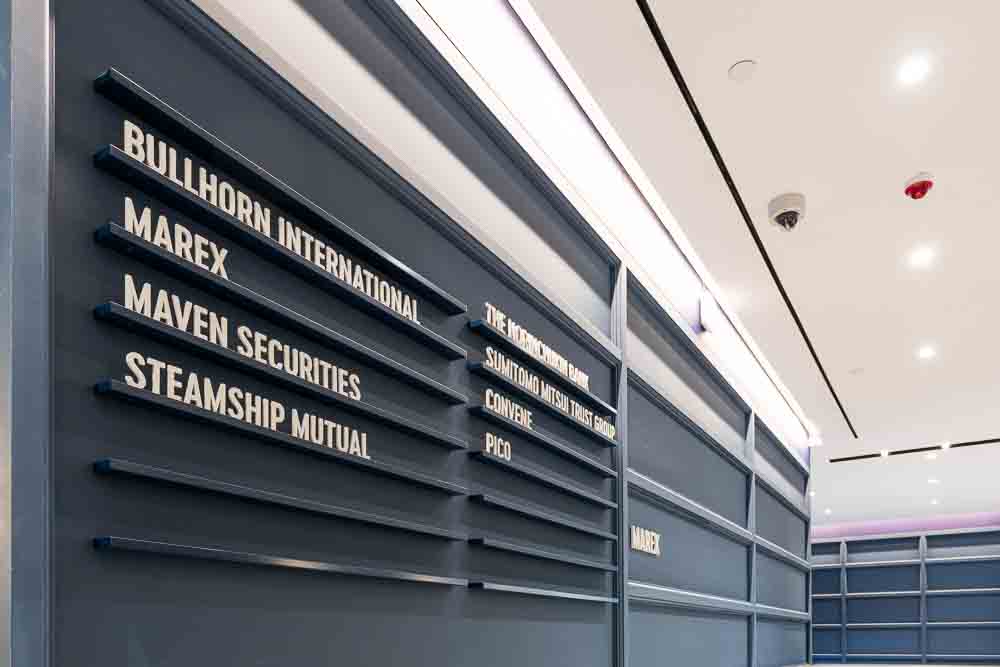
Modular systems such as Jigsaw allow room names and directories to be updated without replacing the entire sign. This is particularly valuable in workplaces where layouts change regularly.
For environments where a more refined finish is required, systems such as Puzzle provide a flush, architectural appearance while maintaining clarity and consistency.
More adaptable options such as Folio offer interchangeable panels, making them suitable for meeting rooms, departmental signage and areas subject to frequent updates.
Selecting the right system is not simply a design decision, it is a strategic one that affects long-term cost, maintenance and consistency.
Material Selection and Finish
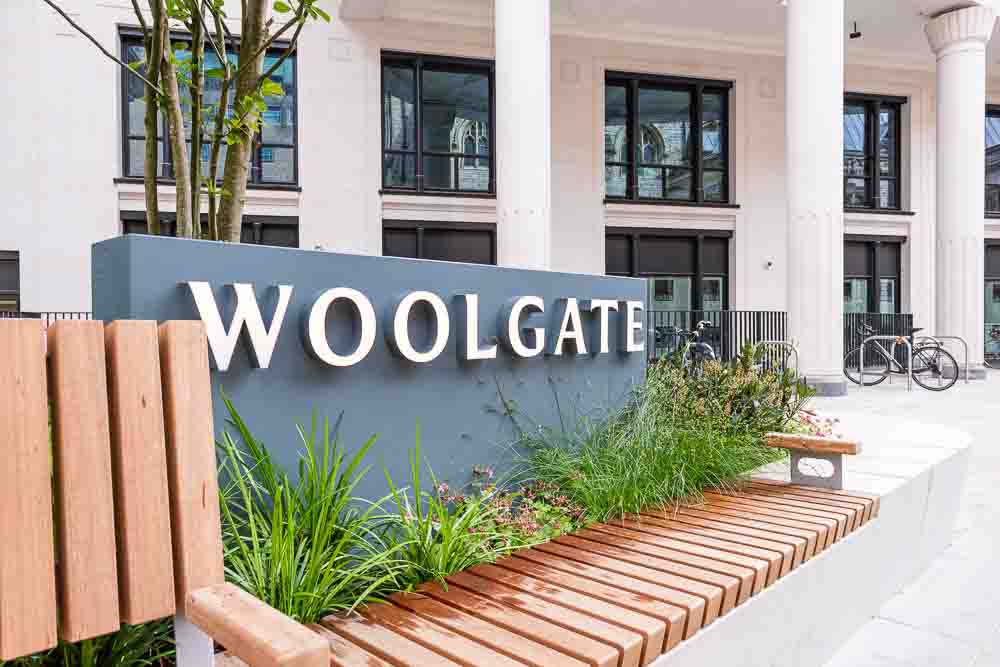
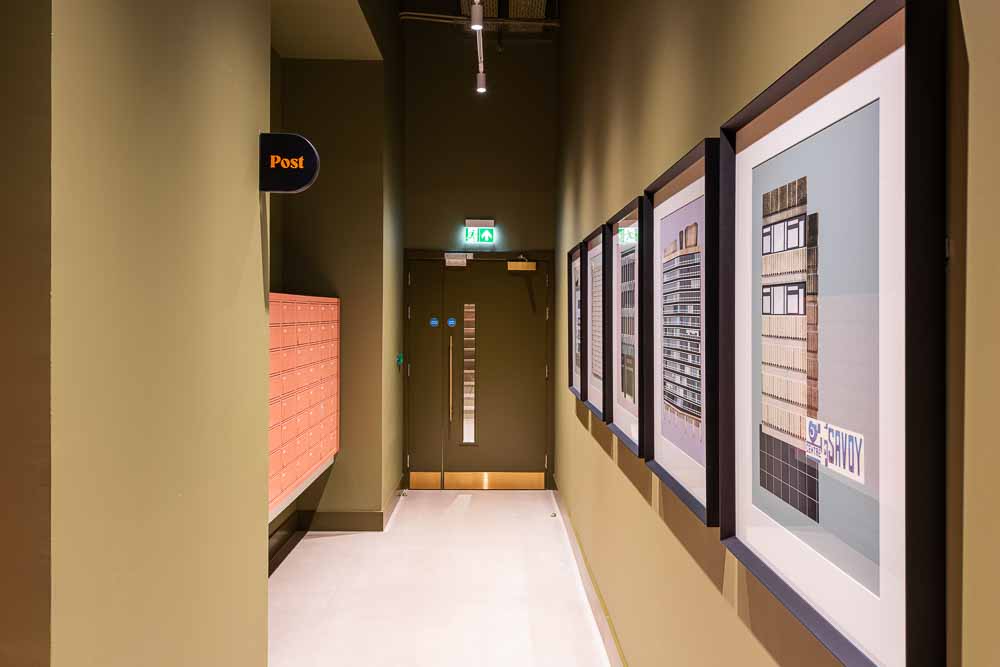
Material choice plays a critical role in how signage is perceived. Office environments often favour materials that are durable but visually restrained.
Stainless steel signage remains a reliable choice for its durability and clean, architectural finish. It integrates well with contemporary interiors and performs consistently in high-use environments.
Alternative materials such as powder-coated aluminium, acrylic and graphic finishes can be used to align signage with brand identity or interior palettes. The key is consistency. Mixing materials without a clear strategy can create visual noise and reduce clarity.
Material selection should also consider maintenance. Office signage is handled regularly, and finishes must withstand cleaning and daily use without degrading.
Wayfinding Within the Workplace
Wayfinding is often overlooked in office design, particularly in smaller buildings. However, even relatively simple layouts can benefit from a clear and consistent approach.
Effective wayfinding does not rely on large quantities of signage. It relies on placement, hierarchy and clarity. Signs should appear at decision points, provide only the necessary information and then allow the user to move on without hesitation.
In larger office environments or multi-floor buildings, a more structured approach to wayfinding and directional signage becomes essential. Directories, floor indicators and directional signs should work together as part of a coherent system rather than as isolated elements.
Designing for Change
One of the defining characteristics of modern offices is change. Businesses grow, restructure and adapt to new ways of working. Signage must be able to accommodate this without requiring constant replacement.
Modular systems provide a practical solution, but future-proofing also depends on design decisions made early. Consistent typography, clear hierarchies and adaptable layouts ensure that updates can be made without compromising the overall scheme.
This is where the combination of modular systems and well-considered design becomes particularly effective. The signage remains stable, even as the information evolves.
Office Signage in Modern Workplaces
Office signage is not a single product, it is a system that supports how a workplace operates. When designed properly, it enhances clarity, reinforces identity and integrates seamlessly with the architecture.
At xsign, office signage is approached as part of a wider design and delivery process. By combining modular systems, durable materials and coordinated wayfinding strategies, signage becomes a long-term asset rather than a short-term solution.